Every author has their own methodology for writing. You might Pants. You might Plot. Some of you even Plants.
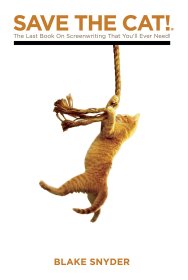 I’d always considered myself to be a Plotter, but didn’t realize how little I knew about plot development until I read Save the Cat!
Originally written for screenwriting purposes, Blake Snyder (of Blank Check fame) unintentionally gave us Plotters the ultimate guide to outlining our manuscripts. His concept is referred to as a beat sheet.
The beat sheet sets up the tentpoles of your manuscript, establishing a three-act structure with certain elements in each (such as, yes, saving the cat) that must be included to propel the plot forward. It’s a simple, powerful formula. Here is your novel, in 15 summarized steps:
- Opening Image: Your first scene is one that sets the tone for the rest of the narrative. It’s Darth Vader’s Destroyer endlessly creeping overhead in the first few minutes of the film, giving you the sense of the enormity and futility our heroes would later face.
- Theme Stated: A question, comment, or thematic promise that hints at the heart of your narrative.
- Set-Up: In which you learn about every main character, by meeting or referencing them, and you address the cast’s current world to set up why the further plot/adventure must take place. Maybe there’s something missing, something these characters want. Maybe they’re all blissfully happy, but there’s a storm on the horizon. This is your before phase.
- Catalyst: The singular moment something spurs the action of the before (Act One) to the after (Act Two). It’s a gun shot, a golden ticket, a blank check.
- Debate: Your characters know what must be done, but at what cost? A decision must be made to take action on the Catalyst.
- Break into Two: Your characters have left their before state behind, and there’s no going back now. Katniss volunteers, and now, she’s on her way to the Hunger Games.
- B-Story: Your story is a journey, and more will happen to the characters than simply propelling through the plot. They’ll make friends, fall in love. Your B-Story is a chance to show new interactions with characters that conflict with the before status quo. It’s Tris abandoning her old faction to make new Dauntless friends and meet that sexy number, Four.
- Fun and Games: More often that not, this is the core premise of your manuscript. This was the plot bunny you chased down the rabbit hole, the heart of your concept. This is where the two conflicting characters in a buddy cop movie (The Other Guys, The Heat) have their hilarious conflict. We were sold a story about an odd couple clashing, and here it is! Blake Snyder would tell you that this is your movie trailer, your hook, where the meat of the premise is delivered.
- Midpoint: A crucial element and the halfway point in the story. Whatever happens to your character here is reversed for the All is Lost. Your character has a win! But alas, little do we know it’s a false win. Or perhaps this is where we experience that temporary defeat, before the victorious turn in Act Three. At this point, the Fun and Games are over and your characters are either “up” or “down,” with trajectory to flip in the coming chapters.
- Bad Guys Close In: Not all is as it seems when the Bad Guys Close In. This section of narrative is how the “up” or “down” from the Midpoint is shaping up for the final act. It’s evil regrouping or the team clashing amongst themselves, leaving a hero alone to face what we know is coming. Or it’s the opposite. It’s the team rejoining after that defeat, ready to take on Act Three.
- All Is Lost: This is the inverse of the Midpoint beat. This is often where you see your character alone, questioning her purpose, or feeling like the final act is beyond reach. There’s mention in the book that this is where character deaths occur, or a whiff of death (Blake’s term).
- Dark Night of the Soul: It’s bleak and your character is reeling from the All is Lost. It feels like your character is broken down and won’t be able to continue…
- Break into Three: …but this is when she harnesses that strength deep inside, or comes up with the genius idea to set the universe right again.
- Finale: Act Three has arrived. All storylines merge together and we create the after the characters sought in the before. Every scene has led you to this moment!
- Final Image: Opposite of the opening image. It’s a new world, one created from the journey.
If you found this helpful, I recommend buying the book. It includes other helpful tips about audience types, tropes, pitching, and scene structures. You are able to download various versions of this beat sheet across the internet, as well. Happy writing!
 Brianna Lieberman